Sunday, April 21, 2013

Where Are All the Books?: The Unique Challenges of Learning Portuguese


Portuguese is the 7th most spoken language in the world, with official status in 9 countries and Macao, pus, it’s the most spoken Romance language in all of Asia and the Pacific, particularly Japan.  This should make it fairly easy to find language resources and books.  That would make sense, right? 

Unfortunately, that’s no where near the case.  I’m having the hardest time trying to find language books, other than travel phrasebooks or beginner’s courses.  I’ve found some great grammar books to work from (I’ll eventually get around to reviewing each of them), and even some that explain both European and Brazilian Portuguese.  However, workbooks, general courses, or readers are much harder to find. 

My favorite so far is the “Practice Makes Perfect: Basic Portuguese” by Sue Tyson-Ward (which I actually managed to find in a brick and mortar Japanese bookstore!).  Each short chapter explains an important grammar lesson or verb conjugation, as well as a list of new vocabulary, and then has some exercises to help you practice what you have learned.  It’s a great way to learn basic Portuguese grammar and vocabulary (though I definitely think it’s best to have another resource to help with pronunciation and listening, and another vocabulary resource would be helpful, since some of the definitions are a bit off).  It uses European Portuguese as the standard but also explains the alternative grammar and vocabulary of Brazil, including Brazil-specific questions within each practice session.  Basically it’s the perfect beginner’s course.  However, they don’t make an intermediate level, and it's proving impossible to find a European Portuguese intermediate book, at least from Japan.  

I’m constantly searching for a good intermediate-level Portuguese reader.  Currently, I’m working through Harry Potter in Portuguese, but it’s still a bit to challenging to get through without the help of my teacher.  I recently went to a couple large bookstores in Osaka which are supposed to have great foreign language sections.  Boy was I shocked at how little they had in stock!  In Japan, there is a huge number of Brazilian residents, and Portuguese is the most spoken European language in the country, other than English.  At these bookstores, however, I found a huge number of English, French, German, and Italian books but almost nothing in Portuguese.  What I did find were books for teaching Portuguese to Japanese people, and those books were almost entirely in Japanese.  One book didn’t even write the Portuguese words in the Latin script, keeping it entire in Japanese kana!  In one bookstore, I found an entire shelf of Italian language literature and readers, and only 1 Portuguese-English dictionary.  Seriously.  1 book.

After looking online, I noticed this wasn’t just a Japanese thing.  There are almost no beginner or intermediate level Portuguese readers printed, especially when you compare it with Spanish, French, German or Italian.  I ordered the few books I could find, and hopefully they will help me increase my reading proficiency by the time I take my Portuguese exam.  Unfortunately, they are all about 20 pages each, so not particularly helpful either.

My next mission: try to find some Portuguese-language manga.  The internet says they’re out there… somewhere….

Sunday, April 7, 2013

Language Rant #2: Beginner Japanese, Year 3


I’ve now been living in Japan for 3 years, and after 3 years of living in a foreign country, you would expect to be able to at least hold a very basic conversation in the language.  I mean, I only studied German for 1 year in college before studying abroad there and living with a host family.  Even though I struggled, at least I could talk about the weather or watch the news with them.

Then I came to Japan. 

I’ve been taking Japanese classes for most of my time here, but I’m still stuck.  I feel like I haven’t learned anything new in years.  Last class, and we covered basic adjectives for about the 20th time, and I still don’t get it.  I can’t remember vocabulary, I still mix up some Japanese kana when trying to read quickly, and I don’t understand how the grammar works most of the time.  I dread the times when my teacher stops speaking, obviously because she just asked a question, and all I can do is stare blankly because I have absolutely no idea what was just asked.  I can’t even make a guess.  My heart just sinks, and I swear I can hear the sound of crickets in the silence, crickets that are possibly living in the empty part of my brain where Japanese should go.   That silence and helplessness are absolutely the worst feelings in the world.

Now, I’m not someone who has ever really struggled academically.  I’m used to academics just coming naturally.  I wasn’t exactly gifted in math and science in high school (AP chemistry comes to mind), but that was because I was always in the advanced classes, and I accepted being the slow girl in the advanced classes.  And by slow girl, I mean getting a B+, not exactly failing.  Even with German, where I asked for a tutor after the first week of classes, I just had to work at it a bit, and I could get through.  I lived and travel there without any problems.  But this feeling of having no idea what’s going on in class is not one I’m used to or can just accept.  Sometimes it takes all my energy not to just walk out of class in frustration, especially last class, after my teacher kept trying to pressure me into joining a Japanese speech contest. That’s just not going to happen.  No contests or public humiliation for me, thanks.

I absolutely cannot quit Japanese.  I’ve been here 3 years.  Before I leave Japan, I need to at least be able to ask for basic directions or order food on my own. Seriously.  It’s been 3 years.

At least I always have Portuguese to help boost my ego a bit.

Thursday, April 4, 2013

Sakura Experiment #1: Sakura (Cherry Blossom) Angel Food Cake with Strawberries

It's sakura (cherry blossom) season, so I want to attempt some Japanese/western fusion recipes using some of the sakura extract, powder, and preserved blossoms that I've found. 


Ingredients

1 1/2 cups powdered sugar
1/4 teaspoon salt
1 cup AP flour
12 egg whites 
1/3 cup warm water
1 teaspoon sakura extract
1 1/2 teaspoon cream of tartar
1/4 teaspoon red food coloring (or as much as needed -- I went a little too Barbie pink here)

Directions

Preheat oven to 170 degrees C.

In a large bowl, whisk together egg whites, water, sakura extract, and cream of tartar. After the eggs begin to stiffen, slowly sift in sugar, beating continuously. Once you have achieved medium peaks, sift enough of the flour mixture in to dust the top of the foam. Using a spatula fold in gently. Continue until all of the flour mixture is incorporated.

Carefully spoon mixture into an ungreased tube pan. Bake for 35 minutes before checking for doneness with a wooden skewer or chop stick
. When inserted halfway between the inner and outer wall, the skewer should come out dry.


Cool upside down on a wine bottle for at least an hour before removing from pan.  This keeps the cakes from collapsing as they set.


The cakes cooling on some bottles of wine that I just happened to have around my apartment...

Serve with macerated strawberries: Cut strawberries marinated with a pinch of salt, sugar to taste, and a tablespoon port, sherry, or yuzu sake (as I did here).  Let rest for at least 30 minutes.  

Garnish with powdered sugar and fresh or preserved sakura blossoms (rehydrated in water), if available. 


Based on the Good Eats Angel Food Cake recipe, because Alton Brown knows all...


Language Rant #1: Portuguese, but Which One?


It’s been a while since I wrote anything.  

A long while.  

As in I didn’t even have a bookmark to this site on my new computer, but I really need to write now.

Since last summer, I started a new job, still on the JET Programme in Fukui, but now as an advisor to other English teachers, and with what seems like 3 times the amount of work.  Plus, I’m in a very formal Japanese office all the time, and must be available for any emergency or counseling calls that come up, regardless of time of day or how busy I am.  I did apply for this position, and most days I really like it, but I am also constantly thinking about the next step in my life (hopefully as a Foreign Service Officer), so I need to make sure that whatever free time I do have to myself, however limited, I need to try to use it to help me get to the next step.  In practice, that means I use all of my free time during the week to study foreign languages.  My German has unfortunately gotten embarrassingly rusty, due to lack of practice (more on that later), but I do have the opportunity to take regular classes in Japanese and Portuguese. 

Portuguese is largely going pretty well for me.  It was technically my first language, though I largely refused to speak it starting around the time I learned the words “Speak English”, but I have always been surrounded by the language, no matter how much I used to try to block it out (wow, I was a stubborn kid).  I’ve been studying and taking classes now for over 6 months, and on the most part, they’ve gone pretty well.  My listening and reading comprehension are at a surprisingly high level (at least a B1 level, using the EU language standards), but unfortunately my spoken and written Portuguese is still a bit pathetic.  It’s gotten to the point that every time I freeze when speaking in class or when writing my homework, I look up or ask what the forgotten word is, I’m always frustrated because I knew the answer.  There’s still a huge mental block.  For example: “I met my new coworkers today.  They are very friendly” comes out “Eu conheci os meus novos colegas hoje. Eles são muito… friendly.”  How do I keep forgetting basic words that I do know?

I know I’m putting a lot of pressure on myself with Portuguese, but I really do need to work on it so I can pass the foreign language test once I pass the Foreign Service interview.  Plus, I have latent fluency in Portuguese, so I -- at least theoretically -- have the potential to master it to a native level.  I just need to work on producing all the vocabulary that is stuck somewhere in my brain.


I also recently decided to try for a Portuguese language proficiency exam, which leads me to a huge frustration when attempting to learn Portuguese: Which Portuguese? 

I grew up with European Portuguese, which will always be the basis for my accent and is pretty deeply ingrained in my cultural identity, but Brazilian Portuguese is much more internationally accepted now as standard Portuguese, especially due to its economic and cultural importance within Latin America.  As much as I love to tell anyone who will listen that the Portuguese are the ones who brought tempura, bread, and various popular pastries to Japan, in the modern world Portugal barely registers when compared to the global importance of Brazil as an emerging economic and cultural powerhouse. 

So I’ve pretty much accepted the fact that I should try as much as possible to learn standard Brazilian Portuguese (Brazilian slang is another issue altogether).  However, the Brazilian Portuguese exam is only available at the intermediate level, which my speaking and writing is still no where near.  There is, however, a European Portuguese test (the CAPLE) at my upper-beginner level (A2), but of course, most books and language resources that are available are Brazilian Portuguese, plus my teacher and any other Portuguese speakers I regularly find in Japan are also Brazilian.  This wouldn’t be an issue if the accents, vocabulary, and even grammar weren’t so different between the two dialects.  From what I've noticed, Portugal Portuguese tends to be somewhat excessively academic and complicated, while Brazilian Portuguese relies heavily on slang and loan words.  I really wish there was some middle ground, but for now I’m stuck attempting European Portuguese at this level, then switching mainly to Brazilian Portuguese at the intermediate level. 

All my Brazilian friends and the exam administrators will just have to deal with my Portuguese-American accent.  That’s never going to change.  And, to be honest, I’ll probably always lean a little bit toward the needlessly academic and complicated.  

It is my culture, after all.

Tuesday, June 14, 2011

Pumpkin Pasta

Here’s a delicious (and super easy) fall/winter recipe that I forgot to put up earlier. It’s a great way to get the flavor of pumpkin ravioli without all the extra work of filling the pasta -- Yes, even I sometimes get lazy when it comes to cooking. I used Japanese Kabocha, but any hard winter squash will work (other than spaghetti squash). If you’re feeling extra lazy, you can even made it with plain canned pumpkin, but NOT sweetened pumpkin pie filling!


***

Pumpkin Pasta (or Inside-out Pumpkin Ravioli)

Pumpkin pasta with a side of bok choy sautéed in olive oil, garlic, and chilies

Cook some pasta (I used whole wheat spaghetti) as you make the sauce. The pasta should be slightly undercooked, since it finishes cooking in the sauce (this is the traditional Italian way to cook pasta). Drain. Save 1 cup of the pasta cooking liquid to add to the sauce (this is a great habit to get into, since adding a little pasta water to sauce generally helps it stick to the pasta).

Pumpkin Sauce
1-2 tbsp. olive oil or butter
2 tbsp. plain all purpose flour
1/2 onion, finely chopped
1-4 cloves garlic, minced
1-2 cups milk (anything from skim to whole milk. If using skim or 1%, increase the amount of flour)
1 tsp. Dijon mustard
Parmesan cheese, to taste (freshly graded is better than the stuff from the green can, but use what you have)
2 cups pureed pumpkin*
Salt and pepper, to taste
Sage (chopped fresh or dried), to taste. You will need about 3 times as much if you use fresh. If you do not have sage, parsley or basil can be substituted.
Pinch of nutmeg, freshly ground if possible
Dried chopped chilies, to taste (optional)
Pumpkin seeds, roasted (optional)**

1. Heat a large saucepan over low heat. Add the oil or butter. If using butter, allow to bubble for a few minutes to allow some of its water content to evaporate. Add the onions and salt and sweat until just translucent (there should be no sizzling, so lower the heat if you hear anything). If using the dried chilies, add at this point to release their flavor. Add the garlic and flour and stir immediately using a whisk to coat the flour with the fat. Cook for a few minutes until you start to smell the flour cooking (it should smell vaguely like bread baking). Add the Dijon mustard, stirring constantly. Add about 1/4 of the milk, whisking quickly to prevent lumps. Increase the heat to medium. The mixture should thicken. Add the rest of the milk and whisk again to prevent any lumps. Add salt and pepper to taste.***

2. Add the pureed pumpkin, cheese, nutmeg, and dried sage (if using fresh, add it at the last minute before serving to have the best flavor). Cook for a couple minutes to allow the flavors to blend. Add about 1/4 cup of the pasta water (it helps the sauce stick to the pasta), and add more if the sauce looks thick. (Remember, starch thickened sauces and gravies continue to thicken after you take them off the heat, so they should always look a it thinner than you would like them served)

3. Add the cooked pasta to the sauce. Stir and allow the pasta to finish cooking in the sauce. Add more pasta water if needed, since the pasta will soak up some of the liquid in the sauce. If using fresh sage, add now. Serve the pasta garnished with some more cheese and some roasted pumpkin seeds, if desired. Enjoy!

* To puree pumpkin, either cut in half and roast in a 400 degree oven for 20-40 minutes, depending on the size of the squash; or peel, cut into rough chunks and steam for 10-20 minutes. Check on doneness by inserting a paring knife or chop stick. It should go through cleanly with little resistance without the squash completely falling apart. If roasted, scoop the flesh out using a large soup spoon. Then puree the pumpkin using a potato masher, food processor, or immersion blender.

** To roast pumpkin or squash seeds: Either toss with a little olive oil and salt and roast in a 350 degree oven for about 10-20 minutes, stirring occasionally. Or cook in a medium saucepan, covered, over very low heat with a little olive oil and salt for about 20-30 minutes, stirring occasionally. The seeds should be golden brown and cooked through when done. For added flavor, you can add your choice of dry spice towards the end of cooking. I like smoked paprika and cumin, chili powder, or garam masala. These make a great snack or healthy addition to salads.

*** Congratulations, you have just made Béchamel sauce, one of the French “Mother Sauces,” or base sauces. It is a great recipe to perfect, since it is incredibly easy and is a starting point of countless recipes, including macaroni and cheese, blue cheese sauce, or country gravy. It is also a great way to make a lower fat cream sauce or creamy soup (I use this recipe, removing the garlic and mustard and adding chopped celery and extra milk, as my base for low fat clam chowder, using 1% milk). If you are making a white sauce, like a basic cream sauce or cheese sauce using a white cheese, substitute white pepper for the black pepper (but use less, since white pepper is hotter than most black pepper)

Monday, March 14, 2011

Build a Better Bento

What is in a Japanese bento? Well, it is a boxed lunch which usually consists of cold or room temperature rice and a variety of side dishes, also served cold or room temperature. In Japanese high schools, there is no school lunch to buy and no microwave to reheat leftovers (my go-to lunch when teaching in the States), so unless I planned on surviving on instant ramen, I would have to be creative and learn to make Japanese-style bento lunches.
My kawaii Alice in Wonderland bento box

The other thing to worry about is that it needs to be filling enough (since the Japanese workday is very long and teachers can’t have snacks during the day, unless it’s a gift from a coworker, but more on omiyage later), and fit into one of the smallish and adorable Japanese bento boxes. Oh, and it should be as visually appealing and kawaii (cute) as possible. There are plenty of places online to see the crazy levels that people go to make kawaii bentos, but, since I’m not artistically talented, I won’t be making any Hello Kitty potatoes or sushi rolls that look like Stitch – sorry.

Every once in a while, I’ll post a picture of a bento that I’ve bade, as well as recipes which are great bento fillers.  They’re mostly a strange mix of Japanese and American, but they work for me.  I hope my suggestions help with my fellow ALTs who have started bringing their own lunches.
---

Today's bento: Broad bean and tomato salad, steamed broccoli, and brown rice with pickled ginger

Broad Bean and Tomato Salad
Dry broad beans
1/2 onion, unchopped
2 bay leaves
2 cloves garlic, whole
1 2-inch piece of konbu* (optional)
Cherry tomatoes, quartered and seeded**
1 tbs salt
Balsamic vinaigrette dressing (see bellow), to taste

1. Rinse and sort the beans (it’s possible, though rare, that small rocks, sticks, and other non-edibles got through the sorting machines, so always give dry beans a quick check before cooking). Cover by at least 1-2 inches of water, and leave to soak in the fridge for up to 12 hours (I usually put the beans to soak before I leave for work).
 
2. Drain and rinse the beans and transfer them to a large pot. Cover with water and add the onion, bay leaves, garlic, and konbu (if using). DO NOT add salt at this time (it will cause the beans to get very soft and burst. Good for blackbean soup or chili; bad for bean salad). Bring to a simmer. When the beans are about 15 minutes from done (but still firm in the center), add the salt to the water. It’s hard to judge the time it takes to cook dry beans, but this batch of broad beans took a long time for me (about 1 1/2 hours). Most batches of soaked beans (especially smaller ones, like kidney or black beans), cook in an hour or less. Test the doneness by eating one or cutting it in half. Do not allow the beans to overcook or become too mushy. For this salad, you want them to keep their shape.

3. When the beans are tender but not falling apart, drain them and rinse under cold water for a minute to stop the cooking process. (At this point, you can remove some of the batch to use for other recipes during the week – I’ll update later with suggestions from what I’ve made with my cooked beans)  Remove the onion, bay leaves, garlic, and konbu.

4. To make the salad, add the cooked and cooled beans to a bowl. Add the quartered and seeded tomatoes and balsamic vinaigrette (see bellow). This salad can be made a day ahead and served at room temperature.

* Quick note about konbu: Konbu is a type of dried seaweed that’s made in Hakkaido and is sold in thick sheets. There are ways to cook and eat it, but in it most frequently used as an ingredient in dashi, Japanese soup stock. It is also used as a flavoring agent in things like beans and rice, and as a way to add nutrients, like iodine and vitamin B12, to these foods. I often use it as a natural source of umami, the fifth basic taste (the savory flavor of things like meat, mushrooms, cheese, soy sauce, and tomatoes). Konbu has little taste on its own, but instead brings out the umami in other foods. In short, it just makes things taste better.
** Why seed the tomatoes? Leaving in the seeds and gel will make the salad far too watery (due to the salt in the dressing drawing out additional moisture) and will add too much acidity. You can skip this step, but the salad won’t be as good. Trust me.

I know it takes a long time to cook dry beans, but they last a while, so it's a great way to cook once on the weekend and have food ready for lunch throughout the week.  Also, simmering beans doesn't need constant babysitting, so you can do something else while you cook (Last night, I was reading the news while cooking the beans, regularly checking to make sure they didn't boil over - obviously I don't suggest taking a nap or going for a jog, but you can do other things around the house while beans cook)

---
Basic Balsamic Vinaigrette

Balsamic vinegar
Dijon mustard
Honey
Extra virgin olive oil
Water (optional)
Dry herbs (parsley, basil, chive, oregano, marjoram, etc)
Salt and pepper
(Sorry, this dressing is done to taste, especially since I like my dressing very acidic and with a lot of mustard. The good thing is once you learn the basic technique, it’s easy to personalize.)

In a medium bowl, whisk together the mustard, vinegar, honey (start with just a little, since balsamic vinegar is already sweet), salt, pepper, and herbs. If you want a lower fat dressing, add some water now (to replace some of the olive oil). Once that is very well mixed (emulsified – the mustard and honey helps the water-based vinegar mix with the oil without separating, if done correctly), begin to SLOWLY pour in the oil as you continue to whisk (it helps to put a moist tea towel under the bowl to help it from sliding around). Once you get to the desired oil-acidic level of the dressing, it’s ready.

Make enough dressing to last a week or two, since it stays well in the fridge, and is so much more delicious than chemical mystery dressings from the store.

The Disaster in Japan

I just wanted to post a map of where I live in relation to Miyagi and Fukushima Prefectures, the location of the earthquake, tsunami, and nuclear power plants.  There was no damage in Fukui, where many didn’t even feel the earthquake (I felt only a tremor, like a heavy truck passing on the highway, for about a minute).

My location in Fukui Prefecture in relation to Miyagi and Fukushima Prefectures.  (Thank again for the map, Anna)

The Japanese prime minister described this disaster as "the most severe crisis in the past 65 years since World War II,"  but there is one impressive fact about the national response to this disaster: even in the most devastated regions, there is still order.  There is no looting, no violence.  I’m in complete awe at the rescue efforts and the local reaction.  To put that into perspective, when I went down to New Orleans on a relief trip about six months after Hurricane Katrina, the volunteers were housed in a warehouse which was patrolled by armed guards and had a strict 10PM curfew, since it was still so dangerous in the Ninth Ward.  That is simply not the case in Japan.

I do encourage everyone to donate to the relief efforts if they can.  Within Japan, all Hearts supermarket locations are accepting donations of blankets, pillows, canned food, and bottled water, and you can make cash donations at any conbini.  Outside of Japan, you can donate through the Red Cross, as well as many other relief organizations.  Here is a great article from the New York Times with information for Americans who want to donate and help the people of northeastern Japan.

Saturday, March 12, 2011

Engrish Food Highlights, part 1

These are some of my favorite examples of food-based Japanese-English (Engrish) that I've seen so far.


"Indian" Curry Powder - Um, I'm not sure that's right...

"Coffee: a hot drink made from a dark brown powder with a strong flavour and smell"  Now doesn't that sound appetizing?

British Bistro Bear?  Wait, am I supposed to enjoy conversation with this plate?  And are there even bears in Britain?  I know I never saw any.

"Boston Club Whisky.  A masterpiece in whisky, presented with pride to be enjoyed with pleasure." Made by Kirin, a Japanese beer and alcohol company.

Technically not Engrish, but it still makes me happy to see my Red Sox first thing in the morning.

Japanese Cocktail Hour: The Yuzutini

The long Japanese winter is on its way out, and spring is still a couple weeks away, but I have found a reason to love this time of year: it's yuzu season!  Yuzu ( ゆず) is a type of Japanese citrus fruit which many people describe as a mix between lemon and mandarin orange (though I think it's most like key lime).  I've been cooking with it a lot recently, so I've decided to post my Yuzutini recipe.  It's a basic flavored martini recipe, based largely on the Cosmopolitan.  Enjoy!
---
The Yuzutini
1 part vodka, chilled
1 part orange liquor (triple sec, Curaçao, Cointreau, or Grand Marnier), chilled
1-2 parts sweetened yuzu or yuzu and lemon juice (depending on how sweet or strong you like your cocktail)
Fresh yuzu, cut into wedges* (key lime or lemon can be substituted if fresh yuzu is unavailable)


* Watch for seeds, since yuzu tends to have a lot more seeds than other citrus fruit of similar size.

Vodka, yuzu and lemon juice, triple sec, fresh yuzu, and a cocktail glass


1. Cool your martini/cocktail/wine class by filling with ice and cold water.  Set aside.


2. Put some ice cubes into a cocktail shaker or large class.  Pour in the vodka, orange liquor, and yuzu juice.  Squeeze a wedge of yuzu into the mix, making sure to bruise the skin (which adds the flavorful essential oils to the drink).  Mix well.
Fresh yuzu

3. Empty the ice water from the cocktail glass.  Squeeze another wedge of yuzu directly into the glass.  Strain the mixed drink into the glass, making sure to strain out the ice and first wedge of yuzu.  Cheers!
The Yuzutini

Vasco da Gama: Portuguese Food in Rural Japan

Today I’ve decided to post something a little different: my review of a Japanese restaurant.  Not just any restaurant, but a Portuguese Restaurant in Fukui!  Crazy!  It’s called Vasco da Gama, which is one of the only Portuguese people that is covered in pretty much every high school history class (he’s the first guy to navigate around Africa to trade with India – yeah, that’s our big contribution to history).

Now, given that I’m 100% Portuguese-American, a bit of a foodie, and was raised in a family of fantastic cooks, I was a little cautious about the Japanese interpretation of Portuguese food (anyone who has been to Japan and eaten at Sizeria, their version of “Italian” food, knows exactly what I mean).  I have to say, though, I was pleasantly surprised at my dinner.

First, it’s a good sign when the chef speaks the language (I didn’t actually have a chance to speak to him to see if he was Portuguese or Brazilian, which is common in Fukui prefecture, so I’ll have to update next time I go).  Also a good sign: when the only non-Japanese writing on the menu is Portuguese, and, from what I could tell, there weren’t any weird spelling/translation mistakes (OK, so my Portuguese reading skills are pretty terrible, but I am pretty much fluent in Portuguese menu reading).  Oh, and every table had a galo napkin holder from Portugal (these roosters are called o Galo de Barcelos and no Portuguese household or restaurant is complete without at least one. 
 If you're ever in a Portuguese kitchen, please play "Spot the Galo" - Trust me. It's there.

So, we were off to a good start.

Now, since it’s Japan (which has a zero tolerance for drinking and driving) and I had drive myself home after dinner, I could not try any wines, which usually complete the Portuguese dinner, but I was excited to see TWO varieties of Portuguese vinho verde (the young, dry white wines which are a Portuguese specialty).  They had both Avaleda, my family’s go-to wine, and Casal Garcia, my sister’s favorite brand.  I’m looking forward to going again with a DD to sample how these wines compare to my usual American imported ones. 

For dinner, I ordered Bacalhau com Nata, a gratin of dried and salted codfish, potatoes, and onions in a cream sauce.  For those who have never eaten bacalhau or its Spanish or Italian equivalent, it doesn’t actually taste salty, since it’s soaked to rehydrate and remove the saltiness.  The salting concentrates the cod flavor and creates a firmer texture.  There’s a reason why it’s the national food of Portugal.  And my bacalhau was wonderful!  The only critique I have is that I would have liked more fish, but then again, they could have handed me a platter of plain bacalhau and I would have been happy.
 Bacalhau, potatoes, onions, cream, and cheese - What's not to like? (Oh, and there was originally also an olive on there, but that didn't last long enough for a picture - sorry)

Dessert was an even better surprise for me.  I ordered the pastéis de nata, which is a custard pastry, and basically the most delicious thing on earth (and if you’ve ever had one freshly baked and warm from the oven, you’d completely agree).  And, once again, the pasties were delicious, with a great flaky and crispy crust and warm filling.  Since the dessert came with two pastries, I was originally planning on taking one home with me for breakfast the next day, but, for some reason, I completely forgot about that plan one bite into the first pastry.
Heaven in pastry form

My dinner at Vasco da Gama, was definitely memorable, and I will have to go back again.  (Next time, I think I’ll order what they call bouillabaisse, which is a French seafood soup from Provence, but I’m curious if they actually mean caldeirada, which is a similar stew from Portugal).  So I’ve learned that occasionally restaurants in rural Japan can have authentic western cuisine, even from a tiny country like Portugal.  At least I found some place to tide me over until I visit home later this spring!

Thursday, March 10, 2011

Dinner in Under 10 Minutes: Toasted Mochi with Citrus Stir Fry

I got home late tonight and was already starving, so my limited dinner options included instant ramen, defrosting some leftover lentil soup, or making something from scratch.  I decided to see how quickly I could make a meal, and it turns out, under 10 minutes from the time I walked into the kitchen.


So here’s my little 10-minute dinner experiment.  I hope you like it.
---
10 Minute Toasted Mochi with Citrus Stir Fry
Packaged plain mochi (glutinous rice cakes)
Asparagus, cut into pieces
Kabocha (Japanese Pumpkin), cut into pieces
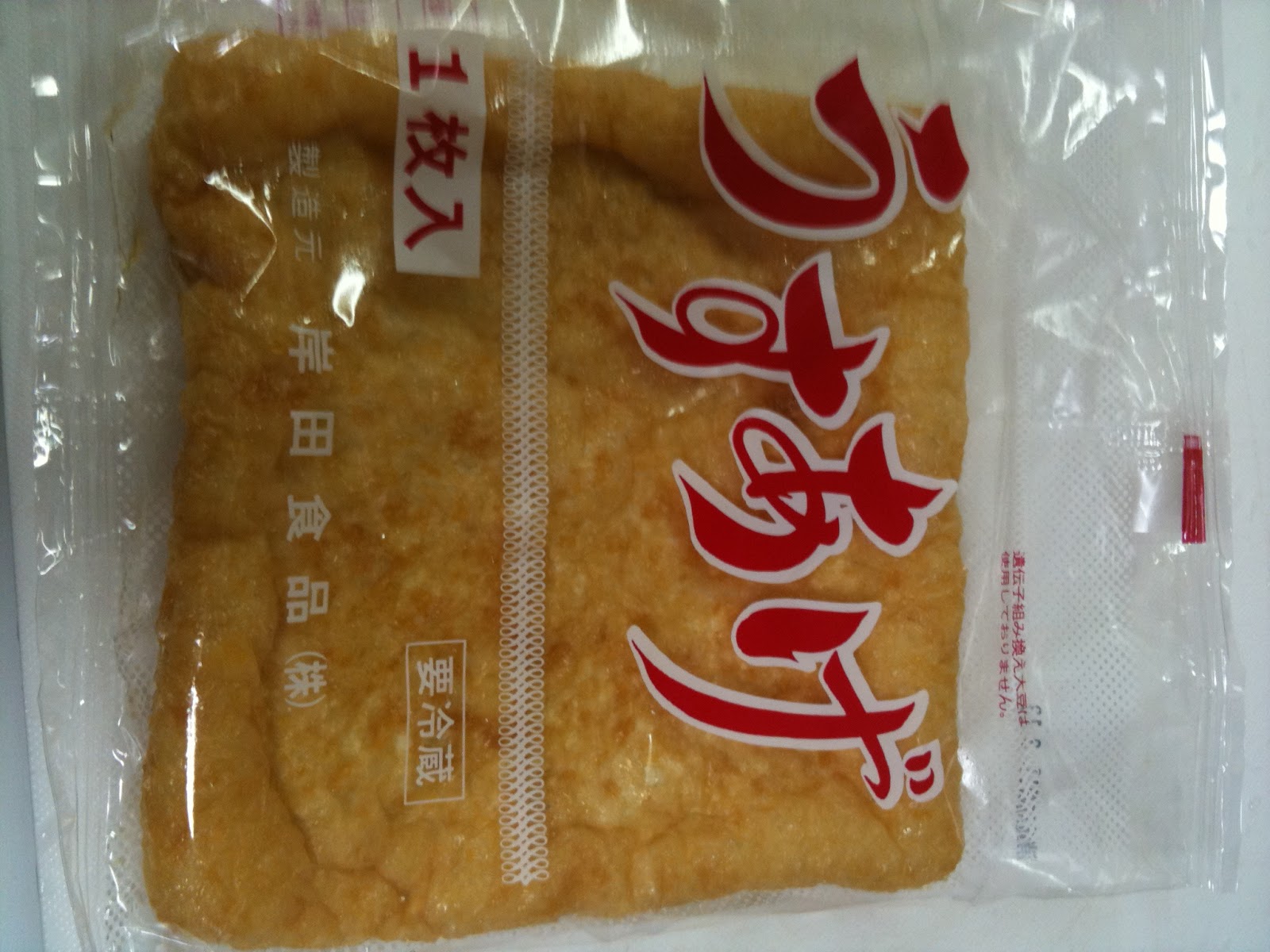
Aburaage tofu (fried sheet tofu), roughly chopped
Scallions (Green/spring onion), chopped fine
Fresh ginger, grated or chopped very fine
Dried chilies, chopped fine
Ponzu – yuzu  (Japanese citrus) soy sauce
Honey
Olive oil
Fresh yuzu or lemon (optional)

 Aburaage tofu

Mochi
 
1. Begin to toast the mochi, either in a frying pan or in the toaster oven.  (Be careful, since, like bread, it goes from perfectly toasted and delicious to charcoal in just a few seconds.)  Flip when the first side is toasted.
 
 Toasting the mochi

2. Blanch the asparagus and kabocha (Boil the vegetables for 1 minute in lightly salted water.  Drain and immediately cool the vegetables by running under cold water or immersing in ice water to stop cooking.)
  
3. Heat a frying pan or walk over medium high heat (a water drop should “dance” in the heat before evaporating).  Add about ½ tsp olive oil.  Heat the chilies for about 30 seconds, then add the ginger.  (Remember, this is a stir fry, so keep the food moving over the high heat to prevent burning)  Another 30 seconds later, add the blanched vegetables, tofu, and scallions.  Cook another minute.   Add the ponzu (2-3 tbsp per person should be plenty) and honey (to taste – I only used about 1/2 tsp for just a little sweetness).  Reduce the heat to very low.
 The stir fry

4.  When the mochi is done (toasted on both sides and puffy and gooey in the center), put on a plate and pour the stir fry over the toasted mochi.  Finish with a squeeze of fresh yuzu or lemon.  Enjoy.
 10 minutes to dinner
 ---

That’s my 10 minute dinner experiment.  It sure beat McDonalds!

Weeknight Dinners 101: Fried Rice

Yes, I know -- it’s been a while. Can I still blame jetlag? Maybe culture shock? Or simple laziness, which is much more likely…
 Well, I’ve decided to update on some of my food adventures in Japan, both my own cooking and interesting Japanese foods I try.
To start, I’m going to post my basic fried rice recipe (like most of my recipes, it’s more of a guideline, since I’m all about changing the recipe to taste or for convenience). This is probably the recipe I make most often, thanks to always having a steady supply of leftover brown rice. It’s the easiest way to use up whatever vegetables you have lying around and the best way to make dinner when you’re desperate for a grocery run, or have been snowed into your apartment for three straight days. (Thank you, Fukui winter…)
[Sidenote: the best purchase since I’ve come to Japan? A good rice cooker, which I got on the cheap from a recycle shop. It’s made my life so much easier, since I don’t need to pay attention to the rice while I cook the rest of dinner, and it always supplies me with enough leftover rice to make this delicious weeknight dinner] 
---
Basic Fried Rice
2-4 cups cooked brown or white rice*
1-2 eggs
1/2 chopped onion
2 small Japanese green peppers or 1 large bell pepper
2 cloves garlic, chopped
1 inch fresh ginger, finely chopped or grated (trust me, it makes a huge difference, and ginger can stay fresh in the freezer for months and is easily grated while still frozen)
Soy sauce (low sodium is best)
Black pepper, to taste
Chopped dried chilies or cayenne pepper, to taste
Sesame oil (again, makes a huge difference, but optional)
Olive oil or vegetable oil (it’s also amazing with homemade ghee, but that’ll be another post…)


--Now here’s the place for your creativity/desperation (need to use up that last carrot or piece of tofu?)--


1 cup protein: some suggestions are chopped chicken breast, extra firm tofu, Aburaage tofu (fried tofu sheets), ham or bacon, shrimp, frozen shelled edamame. Whatever you have or like works (this is a great way to use extra cooked meats, like Thanksgiving turkey or leftover steak).
Other chopped vegetables – I usually use 2-3, depending on what’s in my fridge: 1 chopped carrot, 1/4 chopped kabocha (Japanese pumpkin), finely chopped chilies (seeded), 1 small Japanese eggplant or 1/2 large Italian eggplant, 1 cup shredded cabbage (napa works best), 1/2 head broccoli (blanched***), 1 cup chopped bok choy or spinach, frozen vegetables (peas or a mix of carrots, peas, and corn).**


1. Put a small amount of vegetable oil into a frying pan and heat to medium-high (until a drop of water “dances” before evaporating when it hits the pan). Break the eggs directly into the pan and scramble with a spatula or wooden spoon, breaking it apart as it cooks. Cook until just set, then take out the eggs and leave aside.
2. If you have a protein that needs a lot of cooking (raw chicken breast, block tofu, bacon, raw shrimp), add a little oil into the pan, heat to medium and cook thoroughly. Season with black pepper (do not use salt – there will be enough seasoning with the soy sauce later). Put aside with the eggs.
3. Add a little more oil to the pan and heat again. This time use half sesame oil and half olive oil (the sesame oil adds a lot of flavor, but burns and smokes at a low temperature, so adding the other oil helps). Cook the chopped onion until translucent (if you’re using carrots or pumpkin, add those now, too). Once they’re mostly cooked, lower the heat and add the garlic, peppers, chilies, and ginger, stirring often to prevent burning. (Garlic burns quickly and gets very bitter). Cook about 1 minute.
4. Add the additional vegetables and protein (if they weren’t cooked earlier) and cook through. This will probably take 1-2 minutes.
5. Add the leftover rice, egg, and cooked protein and heat for a minute. Then add the soy sauce to taste and stir. Cook for 1 more minute until the soy sauce is absorbed and everything is heated. Enjoy!


* The best rice for this is actually leftover cooked rice which has been cooled in the fridge uncovered. This way it thoroughly dries out and cooks into fluffy, separated grains. This is especially important for Japanese-style rice, which is medium grain and very sticky.
** Obviously this list could go on forever. Most vegetables work well, though tomatoes, potatoes, celery, and leeks are all examples of vegetables that don’t work well.
*** To blanch a vegetable, cut it into pieces, boil in salted water for about a minute, then cool immediately in ice water or under cold running water to stop the cooking process. This is allows you to stir fry hearty vegetables which take a long time to cook, and is a great way to add vegetables like broccoli, asparagus, or winter squash to a salad.


---


Fried rice is easy to personalize and a great way to experiment. Some of my favorite variations include:
* Adding chunks of fresh or canned pineapple with the vegetables (step 4)
* Using different flavored soy sauces: ponzu (yuzu Japanese citrus soy sauce), chili, and konbu (Japanese seaweed) soy sauces all work great.
* Adding curry powder (or Garam masala and tumeric) and cooking it with the onions makes a great Japanese dry curry rice


Well, I hope you like my basic fried rice. Now, you see why I always make so much rice (and how I get through those giant 5Kg bags of brown rice)

Wednesday, June 2, 2010

Why Japan?

As I’ve been asked so many times recently, “Why Japan?” Well, the most basic reasons are spelled out by the title of this blog and give a good idea about why Japan has always been so high on my list of places to visit.

First: Nihon Ryōri, or traditional Japanese food. Simply put, I love food. I love to cook. I love to watch chefs cook. I love to read about food. Most importantly, I’m fascinated by international culinary culture. (And yes, I do love Anthony Bourdain and his style of travel food writing). I’ve been to the great culinary capitals of Europe (Paris, Rome, Vienna – though sadly not yet Tuscany), but never to Tokyo or Osaka. How can I say I love to travel and love world cuisine without visiting one of the greatest food cultures in the world? I would argue that the only country which respects its national culinary tradition to the same obsessive level would be France (and believe me, I never had a bad meal in France, even when just getting a quick snack in Paris). So, of course I would need to get to Japan as soon as possible. And, yes, eating Fugu is pretty high on my list of things to do in Japan!

Next: Yakyū, or baseball. I can be pretty picky about which sports I can sit through without getting distracted (I still can’t sit through a whole Celtics or Bruins game), but I love baseball. And baseball in Japan is a whole other world. I’ve seen many games in at a few different MLB stadiums, but I want to see how different the baseball culture is in Japan. I’ve read that the fans are even more obsessed than Red Sox fans or even British soccer fans, so I’m going to have to see that for myself. But what I’m really interested in is the idea of baseball, America’s pastime, viewed, instead, as Japan’s pastime and how that makes it different.

Last: “Tokyo Story,” a 1953 film, and arguably the best work by my favorite Japanese director Yasujiro Ozu, who was famous for portraying everyday life of Japanese middle- and working-class families. If possible, I’m even more obsessed with film than with food. I love world cinema, particular getting to watch a new film in its native country (I will never forget watching “Der Untergang” while in Berlin back in 2004). And, like with food, Japanese cinema is considered an integral part of its culture, though I will be interested to hear if anyone around my age would have the same love of classical Japanese directors like Ozu or Akira Kurosawa.

So that’s it. My interest in Japan boiled down to the three basic – and fairly trivial – elements: Nihon Ryōri, Yakyū, and “Tokyo Story.”

That’s why Japan.

Tuesday, June 1, 2010

2 Months to Japan


So, I've been accepted to teach English in Japan with the JET Program. I know I will be in the Fujui Prefecture (a largely rural area in central Honshu, the main island). And that's about all I know. I still haven't been told where I will be within the prefecture or in which grades I will be teaching, but hopefully I'll find something out before I arrive in Tokyo!

As of right now, I have almost no knowledge of Japanese -- My (mostly useless) vocabulary includes: the basics (Konnichiwa, Dōmo arigatō, sushi/nigiri/sashimi), Watashi wa Amerikajin desu ("I am American," which will be pretty redundant coming from me), and various words learned by watching far too much Travel Channel: Fugu (the infamous dish of potentially fatal pufferfish), Kuidaore (excessively eating to financial ruin), and Getemono (bizarre, adventurous foods). Oh, and of course Gaijin, or foreigner. I'm guessing I'll hear that a lot due to all the stupid cultural mistakes I will be making.

I'll update again when I'm a little less clueless about next year!